
.jpg)
PROTECT YOUR DNA WITH QUANTUM TECHNOLOGY
Orgo-Life the new way to the future Advertising by AdpathwaySay what you will about Queen Games and their publishing practices, but when you partner with a game designer like Stefan Feld, you’re bound to generate some good games, even if the boxes are larger than necessary, the prices are a bit high, and the colorful artwork rarely endeavors beyond the Fisher-Price palette. I am fortunate to be part of a gaming group where others have done the backing, and I simply get to play new and refurbished Stefan Feld titles—thank you, Leonard! I’ve enjoyed at least a few of these titles well enough to purchase my own copy as well. Now that the first 10 titles of the Stefan Feld City Collection have officially been delivered, and I’ve gotten to play each one at least once, here is my personal ranking of the top 10.
Note that theming will not be playing a role for this list, as almost every game could be summarized as, “you’re an important person in X city hoping to increase your influence by doing Eurogame point salady things.” I will also compare my rankings to how these 10 titles are ordered according to the current BGG overall rankings.
 10. New York City
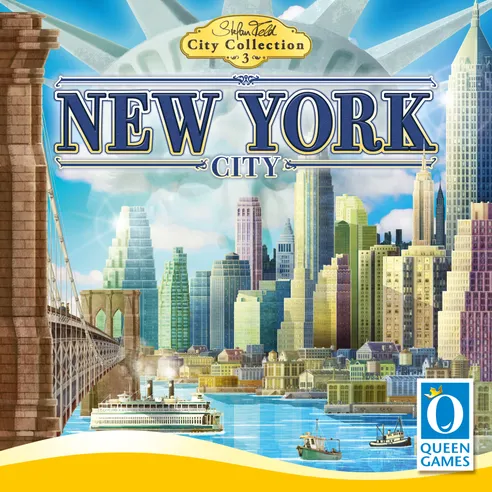
(-5 compared to BGG rank)
New York City is a reimplementation of Rialto, and it’s still an auction game. The cards used for bids round-to-round are not inherently balanced. Rather, 3 are random, and the other 4 will be drafted from a common pool. These cards dictate the strength of your bids on up to 6 different types of actions, but they’re essentially all centered on an area control fight among the 6 boroughs of New York, with key actions including acquiring skyscrapers, constructing them within specific zones, changing the point value of zones, and hiring rule-breaking helpers. As a minimal-luck Eurogamer, this game felt way too lucky for my liking. Yes, the game contains strategy, and there is always a way to take certain actions less efficiently if you don’t have the right cards, but certainly, the players with the right cards are going to get much more accomplished than the ones playing the wrong cards at a 2:1 ratio. This is one of the few Felds that I might actually decline if asked to play again.
1-4 Players • Ages 14+ • 45-60 minutes
 9. Kathmandu
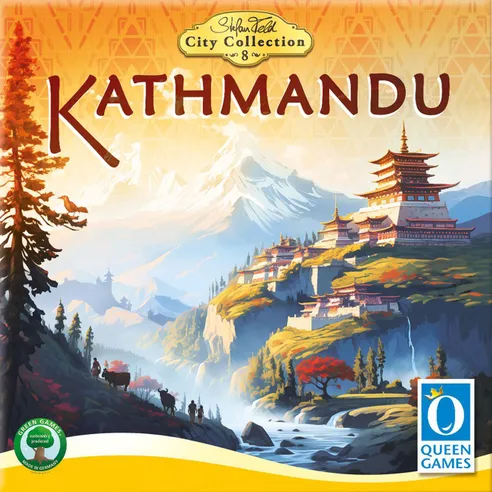
(-2 compared to BGG rank)
Kathmandu is a brand new title, and it’s possibly the lightest game on this list containing a central “roll and move” mechanic. It is also much more tactical as opposed to strategic than the other games on this list, as players will be beholden to a set of 6 differently colored dice that they roll each round, ultimately using just 3. Pip value determines movement, and color determines resource acquisition as players kinda sorta race across the colorful terrain of Kathmandu. If you were really hoping for a big movement but you also desperately need some yak food, you better hope your pink die is high. If not, well, you’ll often find that you’re making the best of not-so-great options, which can actually lead to interesting choices. There’s also a big emphasis on set collection (3 different types) in this game, which is a bit much for my liking. Finally, I was not a fan of the take-that element of this game, which could result in your maps getting stolen, or exhaustion tokens getting assigned—this latter one makes you lose a turn, which just isn’t fun.
2-4 Players • Ages 12+ • 60-75 minutes
 8. Chichen Itza
(+1 compared to BGG rank)
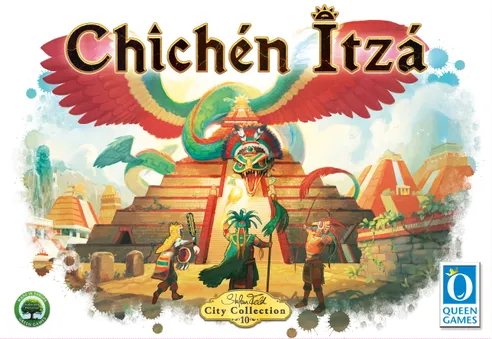
Chichen Itza is another brand new design, and I believe Mr. Feld’s first attempt at a war game. Normally, I’m not someone who likes war games, but this one is done in a manner that includes many appealing Eurogame mechanics. Battle contains 4 main elements: magic, ranged attack, close-combat melee, and defense—each of these can be incrementally improved throughout the game by purchasing upgrades. Battle upgrades, as well as other basic actions like troop deployment, purchase of rule-breaking God cards, and more, are selected worker-placement style from an action grid where each action has a high/low cost. The first player on any given action gets the lower cost, and any subsequent workers must pay the higher cost. These costs change round-to-round, impacting how you’ll prioritize the ordering of your actions. I really enjoy the action-selection grid and find that it creates great player tension. Nonetheless, this is a wargame. Fans of the genre may be unimpressed with the cardboard standees and over-complicated point-salad nature of scoring, which, like many Feld titles, still manages to include set-collection and public objectives. Minimal luck Eurogamers like myself will likely be frustrated by bad dice rolls, which are still bound to happen even with the ample luck mitigation present. This is a game I will play again, but I probably won’t be the one to suggest it.
2-4 Players • Ages 12+ • 60-120 minutes
 7. Nassau
(+1 compared to BGG rank)
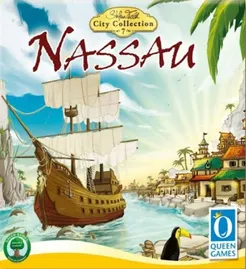
Nassau is a major overhaul of Rum and Bones. The original Rum and Bones portion is now just a small portion of the game where players stock up on necessary resources and abilities for each of the upcoming rounds using a shared maze that artificially restricts players’ collection options. The main part of the game involves sailing your pirate ship on the open seas, collecting treasure, fighting monsters, establishing posts on islands, and completing private missions that are worth bragging about (for points) later on in the round. This is a medium-heavy engine-building point-salad Eurogame where you cannot do everything, so you’ll want to balance breadth vs specificity of accomplishments. My main critiques are that (1) the battle mechanics are non-intuitive, (2) the overall game-flow is less elegant than higher-ranked titles, and (3) at higher player counts the Rum and Bones resource gathering portion feels too chaotic, so I actually like this one best at 2 players.
2-4 Players • Ages 14+ • 90-120 minutes
 6. Valencia
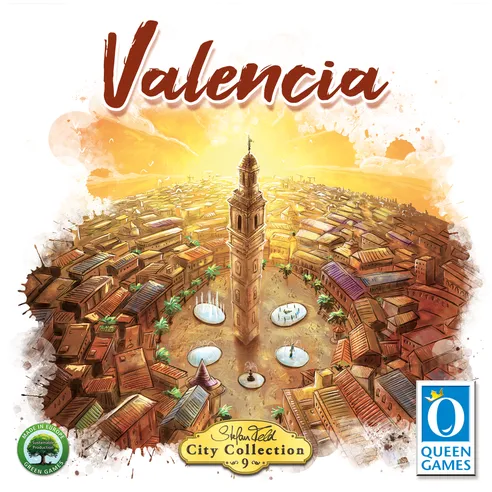
(+4 compared to BGG rank)
Valencia is a re-implementation of Strasbourg, and it is close to the lightest game on this list. At its heart, it’s an auction game, so it’s also one of the more highly player-interactive experiences. All players start with the same exact decks containing bidding cards of various values, so the game is inherently balanced; the order in which players draw from their shuffled decks determines how well they’re able to compete for desired goals round-to-round. Players are primarily bidding on the right to place tokens on a shared map to achieve a variety of both public and personal scoring objectives. There’s also a mechanic of bidding on goods which you can subsequently win the right to sell for money, which allows you to place tokens on more desirable spots. Notably, many of the auctions offer 1st, 2nd, and 3rd place rewards, and thus I think 3-players is the sweet spot for this title. The nature of the auction and how bidding works makes this game feel a little more randomly chaotic than some of the more traditional Eurogames on this list, which is the main reason it’s ranked lower, but it’s one I’m always happy to play.
2-5 Players • Ages 12+ • 60-90 minutes
 5. Hamburg
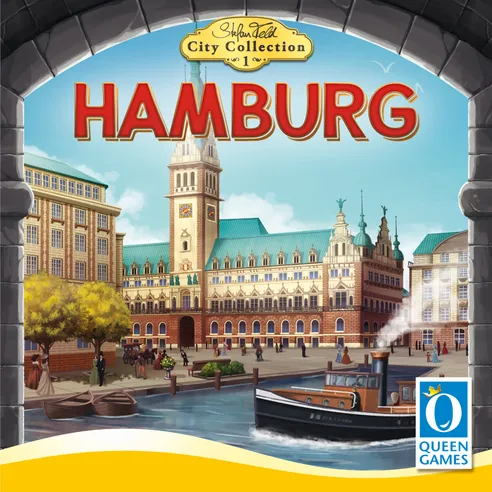
(-2 compared to BGG rank)
Hamburg is a re-implementation of Bruges, including expansion content and some rules tweaks. The biggest rules tweak is that each of the 6-colored cards is drawn from a separate pile, meaning you’re always guaranteed to get the colors you need. I love that the multi-use cards can either be added to your tableau for unique effects or discarded for several different color-specific functions that are tied to a shared pool of dice; it’s a unique twist on dice drafting, and it’s great fun tactically building a synergistic tableau. There’s also an interesting tension created from slowly encroaching potential disasters that need not be too disastrous if you plan well—ex. if you’re about to lose all your money, spend it! What holds this game back from the higher ranks is (1) the symbology on the cards is frequently nonintuitive, so there’s much passing around of the appendix, which slows the game down. Secondly (2), while there are many great combos to be found, luck can be a pretty significant factor with a total of 280 mostly unique cards coming in 22 unique categories divided across 6 colors. In my opinion, a few too many of the cards score or function off a specific category that you may not be able to easily find.
1-5 Players • Ages 10+ • 60-90 minutes
 4. Vienna
(+2 compared to BGG rank)
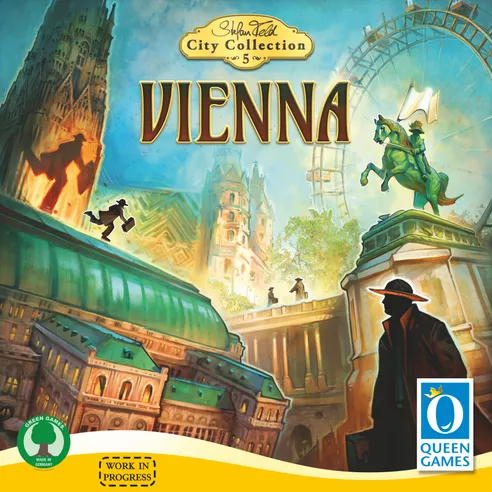
Vienna is a major overhaul and re-theme of La Isla. The idea of racing to encircle various desirable objects on a shared map with multiple of your workers is the same, and this is a fun puzzle as you attempt to move the workers efficiently so that multiple valuable prizes can be acquired with minimal movement. The inclusion of multi-use cards that allow you to constantly rebuild your tableau is also a lot of fun. New to Vienna is the idea of upgrading your capabilities by purchasing perks to increase your hand size, your tableau size, and more. Also new is the inclusion of contracts, which require simultaneous occupancy of specific board sites for scoring, and this adds an extra layer to the puzzle to appease heavier gamers. This is the lightest title making my top 5, and while I thoroughly enjoy it, it is best at higher player counts where there’s more tension on the shared map. It can feel a little repetitive/long for what the decision space is at lower player counts.
2-4 Players • Ages 14+ • 30-90 minutes
 3. Amsterdam
(-1 compared to BGG rank)
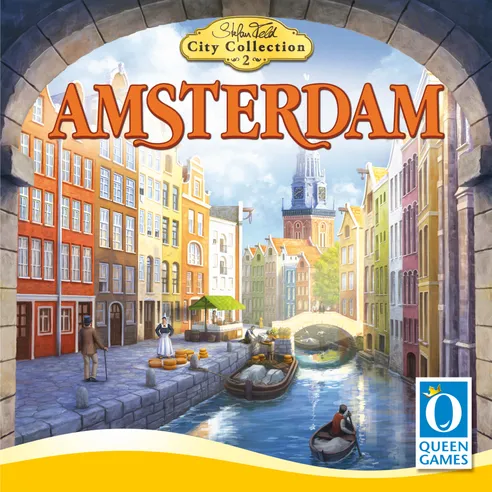
Amsterdam is a re-implementation of Macao. The mechanic centerpiece is delayed gratification of dice drafting. The dice pips determine how many colored/action cubes will be provided, thus making high numbers desirable. The dice pips also determine how many rounds you’ll need to wait to receive these cubes, thus making low numbers desirable. I love a game with ample forward planning, so this mechanic is fantastic, and new to Amsterdam compared to Macao—you can carry a whole cube over from one round to the next! The cubes are used to do a variety of point-salad-type things related to paying for cards, pick-up-and-deliver achievements, and area control on a shared map. My main frustration is the requirement that players draft a new card in every round. Towards the late game, players often draft based solely on what is feasible to get in play (based on upcoming cube colors) as opposed to what the cards actually do to avoid penalties.
1-4 Players • Ages 12+ • 60-120 minutes
 2. Marrakesh
(-1 compared to BGG rank)
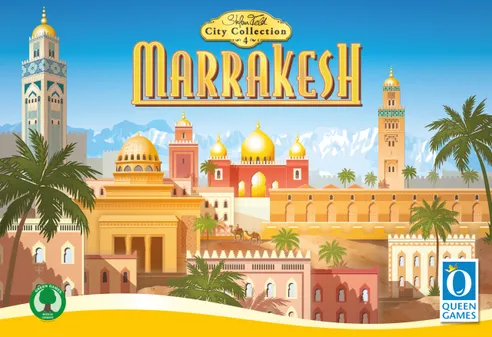
Marrakesh is one of three completely new designs on this list. It’s a Eurogamer’s Eurogame in that it contains 10 different inter-connected mini-games where you’ll probably want to do a little bit of each, but ultimately you’ll need to focus on just a few to maximize point-scoring, in part because the more you engage with the same mini-game, the more powerful its activation becomes for you. The mini-games are all inter-dependent, allowing for some fun and combo-tastic turns. The central mechanic driving the gameplay of Marrakesh is drafting among 12 differently colored tokens that drop from an easy-catch dice tower (similar to Amerigo), where players get to choose which colors are input each round (corresponding to different action types), but they’re not guaranteed to get back their own inputs. Setup is only slightly varied in this game with regards to asymmetric objectives which can push players in specific directions as well as available technologies, so this one feels a little less variable play-to-play compared to my #1.
2-4 Players • Ages 14+ • 120 minutes
 1. Cuzco
(+3 compared to BGG rank)
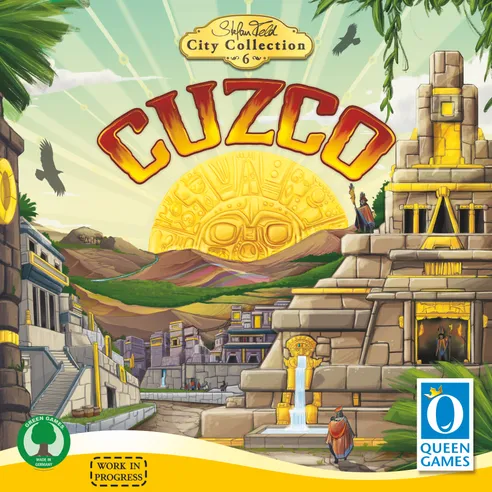
Cuzco is a re-implementation of Bora Bora that only has some rather minor gameplay changes, including 10 new God cards beyond the original 5, a new modular map, and tweaked end-game scoring, the latter of which can easily be adopted into Bora Bora. It’s a heavy point-salad Eurogame with an excellent twist on both worker placement and engine-building. The dice worker placement is Cuzco’s hallmark, with higher-pip dice being more valuable; however, when multiple players activate the same action, each subsequently placed die must have a lower pip value than the previous ones—this means low numbers guarantee access to certain actions and can be used to block other players. The interaction and tension generated from this mechanic is absolutely superb, and I’m shocked I haven’t seen it used in more games. The engine-building is employed in a manner where certain effects are ongoing, others are single-use, and God cards constantly let you bend these rules, which allows for ample creativity. Replay value is excellent since random starting task tiles, and subsequently drafted ones, will encourage different strategies with each play. Some tasks might be more difficult than others; that’s probably my only critique. Investing in God cards gets you out of most jams though, so this one is a nearly perfect game.
2-4 Players • Ages 14+ • 75-120 minutes
That’s all for now! There are many more titles of the City Collection yet to be released, with the next two expected later on in 2026, including Manila, a remake of Amerigo, as well as Beijing, a remake of Year of the Dragon.

/pic9786203.png)







 English (US) ·