
.jpg)
 2 hours ago
3
PROTECT YOUR DNA WITH QUANTUM TECHNOLOGY
Orgo-Life the new way to the future Advertising by AdpathwayGinisang Ampalaya with Pork Giniling is a good way to eat bitter melon when you want something more filling than the usual ginisang ampalaya with eggs. There is plenty of ground pork in it, along with tomatoes, garlic, and onion, and just enough sauce to spoon over warm rice. This is how I like it when ampalaya is going to be the main dish.
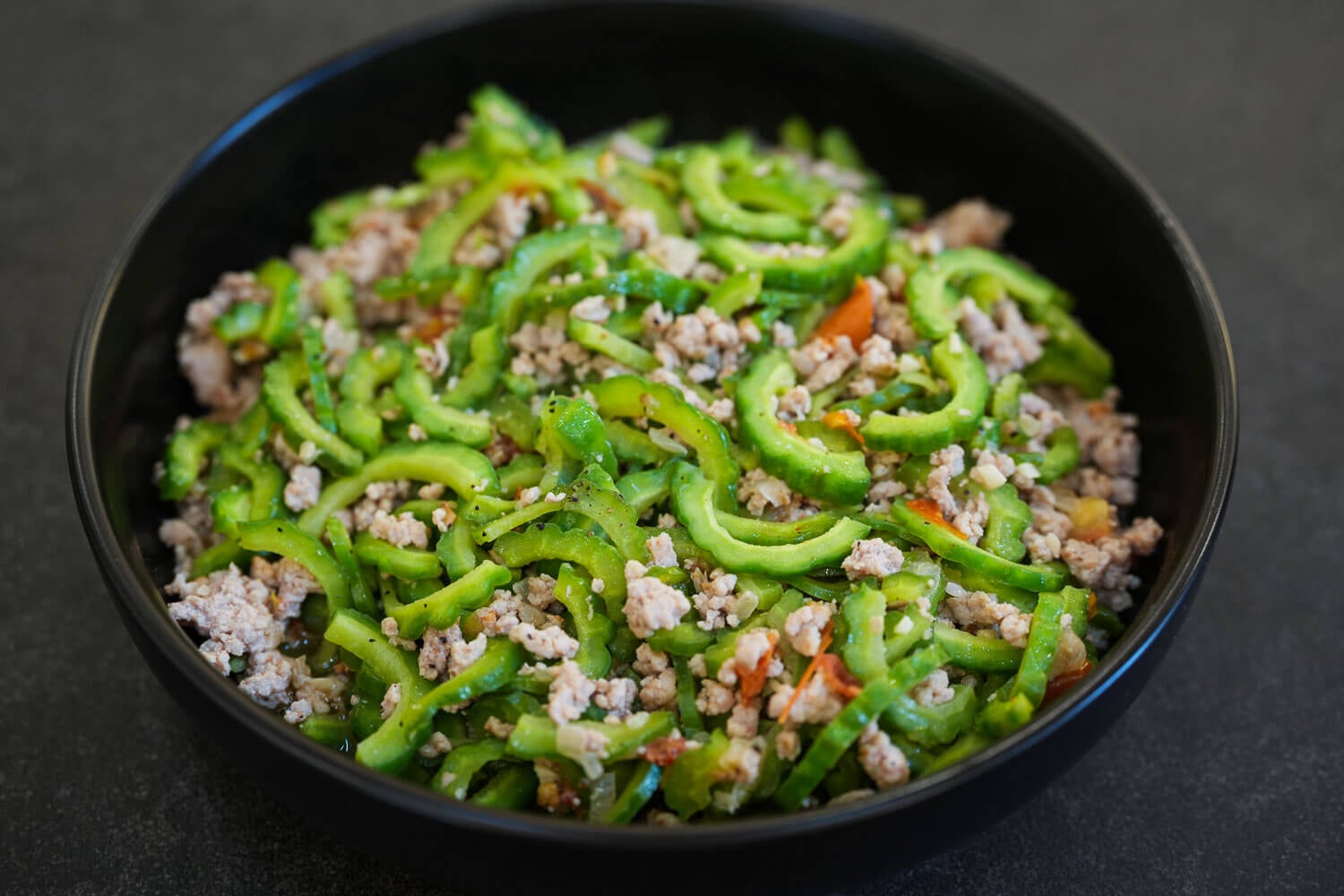
Ampalaya has a bitterness that takes some getting used to. Growing up, it was not exactly the vegetable I looked forward to eating, especially when there were other dishes on the table that I liked better. My mom cooked it often, so I had to learn how to eat it. What I remember is that a simple plate of ginisang ampalaya could turn into a good meal when there was enough meat mixed in, because every spoonful had something savory to go along with the vegetables.
That is why ground pork works so well here. I brown it first with the garlic, onion, and tomatoes, then let it simmer in a little water before the ampalaya goes in. Rubbing the ampalaya with rock salt and letting it sit for a few minutes takes some of the bitterness out, but I do not want to take away its natural taste completely. Three minutes in the pan is usually enough to cook the ampalaya while it keeps a little crunch.
What is Ginisang Ampalaya with Pork Giniling?
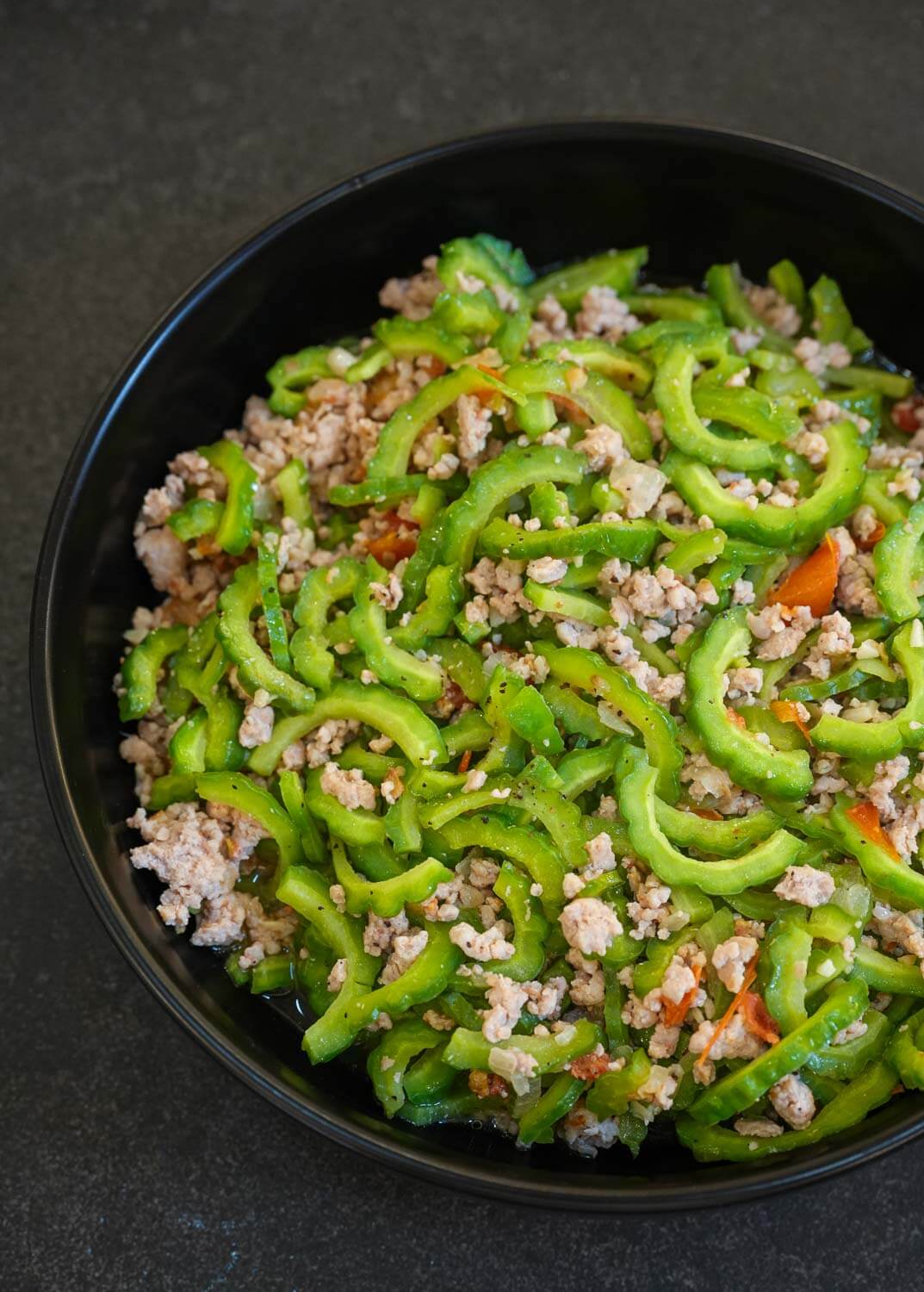
Giniling means ground meat, the same word as in my pork giniling. Everything else is the same as the egg version: garlic, onion, tomatoes, and thinly sliced ampalaya, with fish sauce for seasoning. A pound of ground pork gives the meal plenty of protein, and it is filling enough with just rice.
Why This Ginisang Ampalaya with Pork Giniling Recipe Works
- Salt the ampalaya before cooking – Toss the slices with a generous amount of rock salt and leave them for 15 minutes. This helps mellow the bitterness. Rinse them 2 to 3 times afterward and drain well. You want a little bitterness left, not a salty dish.
- Start the garlic in warm oil over low heat – Put it in while the oil is still warming up and give it time to turn light golden brown before the onion and tomatoes go in. Garlic cooked this way flavors the oil, and the pork picks that up.
- Brown the pork before adding water – Let the meat take on some color before breaking it apart, then keep going until it is light to medium brown and in small, even pieces. Once the water goes in, the pork simmers instead of browns, so the color has to come first.
- Save the ampalaya for last – The pork should already be fully cooked and seasoned with patis before the ampalaya goes in. About 3 minutes keeps the slices slightly crisp and bright green, and you can cook them longer if you prefer them soft.
Ingredients
- Ampalaya – Two large ones, seeded and sliced thin. Pick firm, bright green ampalaya and skip the ones turning yellow or orange.
- Ground pork – One pound of regular ground pork. The fat helps flavor the base. Spoon off some of the grease after browning if there is a lot of it in the pan.
- Tomatoes – Two, diced. Cook them until they soften and break down so they become part of the sauce.
- Onion – One, chopped. It goes in after the garlic and cooks until soft.
- Garlic – Six cloves, chopped. They go in first, while the oil is still warming up.
- Cooking oil – Three tablespoons, enough to start the garlic in and brown the pork.
- Water – Half a cup for the simmer. It cooks the pork through and leaves a little sauce at the end.
- Rock salt – A generous amount for the ampalaya only. Rinse it off well before cooking, and taste before adding the patis.
- Fish sauce (patis) – The main seasoning, added to taste after the pork simmers. Start with a little, since the ampalaya may still carry some salt from the rub.
- Ground black pepper – Added at the end, to taste.
Vanjo’s Advice
- Rinse the ampalaya well and drain it well. Two to three rinses take out the salt, and a good drain keeps the extra water out of the pan so the sauce stays flavorful.
- Keep an eye on the liquid. Half a cup of water is enough for the 10-minute simmer. Add a splash more if the pan looks dry before the pork is done, and let it cook down a little if there is more than you want before the ampalaya goes in.
- Season with patis before the ampalaya goes in. The pork and the sauce take the seasoning during the simmer. Add the pepper at the end and taste once more after the ampalaya is in.
- Cook the ampalaya longer if you like it soft. Three minutes keeps it slightly crisp and bright green. A few more minutes makes it tender, and the color turns a little darker.
How to Cook Ginisang Ampalaya with Pork Giniling
- Place the sliced ampalaya in a mixing bowl. Sprinkle generously with rock salt and toss until evenly coated. Let stand for 15 minutes to help draw out some of the bitterness and excess moisture.
- Rinse the ampalaya thoroughly with water 2 to 3 times to remove the salt. Drain well and set aside.
Saute the Garlic, Onion, and Tomatoes
- Pour the cooking oil into a pan over low heat. Add the garlic while the oil is still warming up. Saute gently until it turns light golden brown.
- Add the onion and continue sauteing until softened. Stir in the tomatoes and cook until they soften and begin to break down.
Brown and Simmer the Pork
- Add the ground pork. Let it cook briefly before breaking it apart with a spatula.
- Continue sauteing until the pork turns light to medium brown and the meat separates into small, even pieces.
- Pour in the water and stir. Cover the pan and let the mixture simmer for 10 minutes, or until the pork is fully cooked and the liquid has reduced slightly.
- Season with fish sauce to taste. Stir to distribute the seasoning evenly.
Ground pork should reach an internal temperature of 160°F. Use a food thermometer if you are not sure it is fully cooked after the 10-minute simmer.
Add the Ampalaya and Serve
- Add the drained ampalaya. Gently toss with the ground pork and sauce until evenly combined.
- Cook for about 3 minutes to keep the ampalaya slightly crisp and bright green. Cook a little longer if you prefer a softer texture.
- Season with ground black pepper. Taste and adjust the seasoning as needed.
- Transfer to a serving plate and serve warm with steamed white rice.
What to Serve with Ginisang Ampalaya with Pork Giniling
- Steamed Rice – Plain white rice, as much as you want.
- Fried Tilapia – My usual choice of fried fish for this.
- Fried Galunggong – Salted and fried until crisp, with bagoong on the side.
- Patis with calamansi – A small saucer on the side for anyone who wants their plate a little saltier or more sour.
Storage
- Refrigerator: Keep leftovers in an airtight container for up to 3 days. The ampalaya softens as it sits, so it will not have the same crunch the next day, but the pork and sauce hold up well. Warm it in a pan with a splash of water.
- Freezer: The finished dish does not freeze well because the ampalaya turns watery after thawing. If you want to work ahead, freeze the pork base after the simmer and seasoning, before the ampalaya goes in, for up to 2 months. Thaw it overnight in the refrigerator, reheat it in a pan until steaming hot, and add freshly salted and rinsed ampalaya for the last 3 minutes.
- Reheating: A pan over low heat for 2 to 3 minutes works best, with a little water added if the sauce has thickened. The microwave is fine too, but the ampalaya comes out softer.
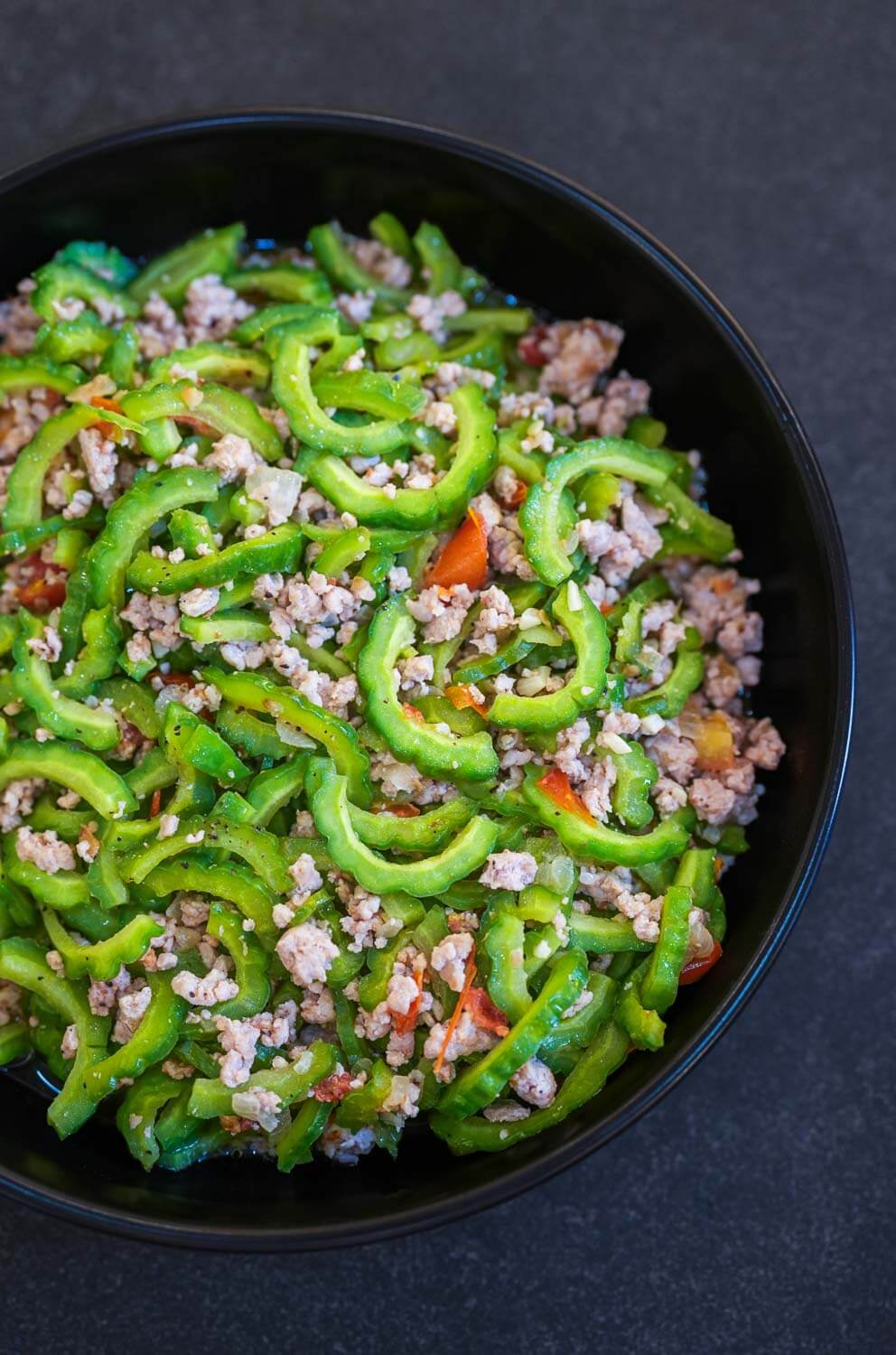
More Ampalaya Recipes
- Beef with Ampalaya – Beef sirloin marinated for 30 minutes in oyster sauce, soy sauce, and sesame oil, then stir-fried with the ampalaya.
- Stuffed Ampalaya – Ampalaya rings filled with a seasoned ground pork mixture, similar to embutido, and baked.
- Ampalaya Salad – Thinly sliced raw ampalaya with red onion and tomato in vinegar, a fresh side for fried fish.
- Ginisang Sardinas with Ampalaya – Canned sardines sauteed with bitter melon, done in about 15 minutes.
- Ginisang Gulay – Sauteed mixed vegetables that include ampalaya and okra.
- Ginisang Ampalaya with Shrimp – The egg version with shrimp added, salted the same way before cooking.
- Rock salt – Fine salt or kosher salt works for the rub. Use less of it, and rinse the same way.
- Ground pork – Ground chicken or ground beef can replace the pork, with the browning time adjusted to the meat. Ground chicken makes a lighter dish with less fat in the sauce, and it should reach 165°F before the ampalaya goes in.
- Fish sauce – Salt, or a seasoning granule like Maggi Magic Sarap, which is what I use in the egg version.
- Tomatoes – Canned diced tomatoes, drained, when fresh ones are not good.
- Ampalaya – Chinese bitter melon, the lighter green and smoother kind, is a little milder and cooks the same way.
Frequently Asked Questions
Do I need to rinse the ampalaya after salting it?
Yes. Rinse it 2 to 3 times under running water, then drain it well. The salt is only there to draw out the bitter juice, and anything left on the slices goes straight into the dish.
Can I add eggs to this recipe?
You can. After the ampalaya has cooked for 3 minutes, push everything to one side of the pan, pour in 2 beaten eggs, let them set for a few seconds, then stir them into the rest. That is how the eggs go in on my ginisang ampalaya with shrimp.
How do I make the ampalaya less bitter?
Scrape out the seeds and the white pith before slicing, since the pith adds to the bitter taste. Slice the ampalaya thin, then do the rock salt rub and the rinse.
Can I use sliced pork instead of ground pork?
Yes. Thinly sliced pork works, but the cooking time depends on the cut and thickness. Let a tougher cut simmer longer until tender before adding the ampalaya, and add a little more water if needed.
How do I keep the dish from turning watery?
Drain the ampalaya well after rinsing, and let the half cup of water reduce during the covered simmer before the ampalaya goes in. If there is still more liquid than you want, cook the finished dish uncovered for another minute or two.
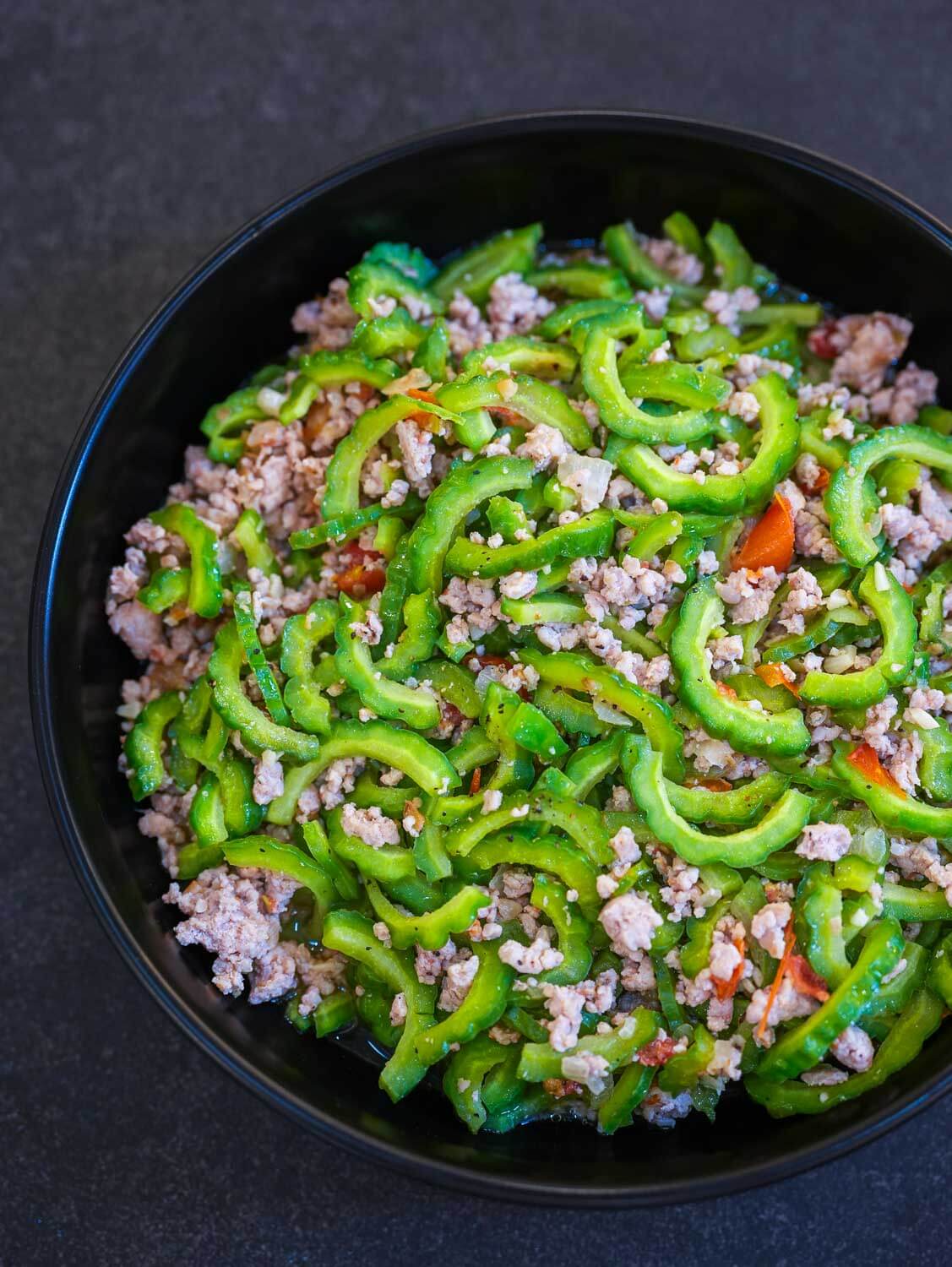
Ginisang ampalaya with ground pork is best enjoyed right after cooking, while the vegetable still has a little crunch. The slices continue to soften as they sit in the hot pan, so I would not leave them there too long. Serve it with warm rice and spoon some of the sauce over the top. Growing up, I needed something savory on my plate to enjoy ampalaya, and that is exactly what the ground pork does in this version. A pound of it is enough that I can have this as a complete meal without preparing another meat dish on the side.
Watch How to Make It

Did you make this? If you snap a photo, please be sure tag us on Instagram at @panlasangpinoy or hashtag #panlasangpinoy so we can see your creations!
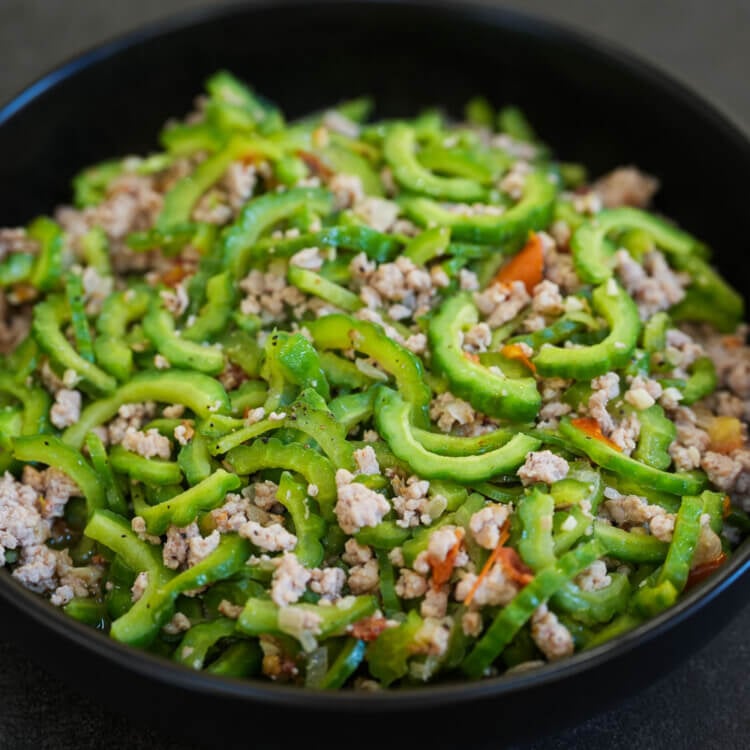
Ginisang Ampalaya with Pork Giniling
Savory ground pork sautéed with garlic, onions, and ripe tomatoes, then combined with thinly sliced ampalaya prepared to reduce bitterness while keeping its crisp texture. Seasoned with fish sauce and ground black pepper, and served warm with steamed white rice.
Prep: 20 minutes
Cook: 20 minutes
Total: 40 minutes
Ingredients
- ▢ 2 pieces large ampalaya (bitter gourds) seeded and thinly sliced
- ▢ 1 lbs ground pork
- ▢ 2 pieces tomatoes diced
- ▢ 1 piece onion chopped
- ▢ 6 cloves garlic chopped
- ▢ 3 tablespoons cooking oil
- ▢ 1/2 cup water
- ▢ rock salt a generous amount, for reducing bitterness
- ▢ fish sauce (patis) to taste
- ▢ ground black pepper to taste
Equipment
1 Mixing bowl For salting the ampalaya
1 Colander For rinsing and draining the ampalaya
1 Wide pan with lid For sautéing and simmering
1 Spatula For breaking up the ground pork
Instructions
Place the sliced ampalaya in a mixing bowl. Sprinkle generously with rock salt and toss until evenly coated. Let it stand for 15 minutes to draw out some of the bitterness and excess moisture.
2 pieces large ampalaya (bitter gourds), rock salt
Rinse the ampalaya thoroughly with water 2 to 3 times to remove the salt. Drain well and set aside.
2 pieces large ampalaya (bitter gourds)
Pour the cooking oil into a pan over low heat. Add the garlic while the oil is still warming up and sauté gently until it turns light golden brown.
3 tablespoons cooking oil, 6 cloves garlic
Add the onion and continue sautéing until softened. Stir in the tomatoes and cook until they soften and begin to break down.
1 piece onion, 2 pieces tomatoes
Add the ground pork. Let it cook briefly before breaking it apart with a spatula. Continue sautéing until the pork turns light to medium brown and separates into small, even pieces.
1 lbs ground pork
Pour in the water and stir. Cover the pan and let the mixture simmer for 10 minutes, or until the pork is fully cooked and the liquid has reduced slightly.
1/2 cup water
Season with fish sauce to taste. Stir to distribute the seasoning evenly.
fish sauce (patis)
Add the drained ampalaya. Gently toss with the ground pork and sauce until evenly combined. Cook for about 3 minutes to keep the ampalaya slightly crisp and bright green. Cook a little longer if a softer texture is preferred.
2 pieces large ampalaya (bitter gourds)
Season with ground black pepper. Taste and adjust the seasoning as needed.
ground black pepper
Transfer to a serving plate and serve warm with steamed white rice. Share and enjoy!
Notes
Choosing ampalaya – Pick gourds that are pale green with wide, smooth ridges. These are milder than the dark green, narrow-ridged ones and need less salting.
Trimming – Scrape away every bit of the white pith along with the seeds. The pith holds most of the bitterness, so a clean cavity makes a big difference before the salt even goes on.
Squeezing – After the final rinse, press the slices gently between your palms to wring out extra water. Drier slices sear instead of steam when they hit the pan.
Storage – Refrigerate leftovers in a covered container for up to 3 days. Reheat briefly in a pan over medium heat; the ampalaya softens a little but the flavor holds.
Scaling – When doubling, cook the pork in a wide pan and add the ampalaya in two batches so it stays in contact with the heat and keeps its snap.
Nutrition Information
Serving: 325g Calories: 445kcal (22%) Carbohydrates: 12g (4%) Protein: 21g (42%) Fat: 33g (51%) Saturated Fat: 11g (55%) Cholesterol: 82mg (27%) Sodium: 820mg (34%) Potassium: 650mg (19%) Fiber: 3g (12%) Sugar: 4g (4%) Vitamin A: 500IU (10%) Vitamin C: 60mg (73%) Calcium: 40mg (4%) Iron: 2mg (11%)
© copyright: Vanjo Merano







 English (US) ·