
.jpg)
PROTECT YOUR DNA WITH QUANTUM TECHNOLOGY
Orgo-Life the new way to the future Advertising by AdpathwayAs health systems continue to grapple with workforce shortages, rising costs, and growing demands for efficiency, virtual care technologies are evolving beyond pilot projects into enterprise-wide strategies. For organizations seeking to improve patient throughput, reduce administrative burdens, and strengthen workforce retention, virtual nursing has emerged as a promising solution.
Healthcare Innovation spoke with AvaSure CEO Adam McMullin and Hackensack University Medical Center Vice President and Chief Nursing Officer Ramonita Jiménez about the real-world impact of intelligent virtual care. From reducing falls and infections to improving nurse satisfaction and accelerating patient discharges, their experiences offer a glimpse into how virtual care platforms are reshaping inpatient care delivery—and where AI-enabled healthcare operations may be headed next.
Hackensack University Medical Center Vice President and Chief Nursing Officer Ramonita Jiménez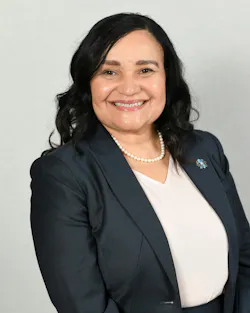
Could you tell me a bit about your organization?
Jiménez: Hackensack University Medical Center is part of Hackensack Meridian Health. We are the largest healthcare employer in New Jersey. Here at this local site, we have about 10,000 team members. We are the number one hospital in New Jersey. We have 803 beds and are growing.
What led to your decision to utilize AvaSure’s intelligent virtual care platform?
Jiménez: It was something that the organization felt we needed to do to support our workforce, our novice workforce. They decided to do virtual nursing, which is a type of team nursing, which will shift the administrative burden from the bedside nurse to the virtual nurse.
Were there any specific challenges the hospital wanted to address by using this platform?
Jiménez: We wanted to improve our length of stay and expedite discharges. If we're full and unable to move people out of the hospital or discharge them in a timely manner, it impacts patients waiting in the emergency room for a bed. We wanted to reduce the time patients waited as soon as they arrived.
We also wanted to enhance RN retention to keep those nurses at the bedside by supporting them. Then we wanted to decrease that administrative burden on the bedside nurse, so the virtual nurse is able to do the intake. The nurses who are here, boots on the ground, as I call them, are able to do other things for patients.
Then also improve patient satisfaction, reduce our traveler and premium staffing expenses, improve nurse satisfaction, and help us with our quality metrics.
What are some examples of outcomes you observed?
Jiménez: We observed reductions in patient falls and catheter-associated infections. We were able to see the numbers go down on the unit where we were doing virtual nursing across the board. In addition, we were able to reduce our traveler utilization.
Were there any surprise outcomes?
Jiménez: One thing we thought would happen but didn't, was that patients would push back and say, “I don’t want a virtual nurse; I want the nurse in the room.” Surprisingly, they like the fact that there is another nurse attending to them.
We have the virtual nurse attending to the patient, and then we have the nurse, the boots on ground, attending to the patient. We anticipated that there would be some pushback from patients. Actually, patients embrace it, but we do speak to it when patients are admitted.
We have the same amount of people working. We just have an extra pair of eyes.
Could you walk me through how it works?
Jiménez: The patient will come up from the emergency room, and the nurse is expected to do an intake on the patient. The virtual nurse is notified by the nurse that's on the unit through our Epic chat. Then they know that the virtual nurse knows that there's a patient assigned to them, and they will do the intake, the admission, for us. The nurse who's virtual on the TV will actually knock. That nurse will open up the screen, come in, say hi, and then proceed to ask all the questions. All of that is entered in the system.
That virtual nurse can also teach patients about their medications and can go over any of our protocols. If you're high risk for falls, that nurse can speak to the patient about the protocol, what to do, and how to make sure that they're kept safe.
Were there any challenges when implementing this?
Jiménez: The challenge at the beginning was the staff getting used to it. I have to say that once they started to work with the virtual nurse and the technology, they loved it. Just getting used to the fact that when the patients come up, or the patients need education, you have someone that you could tap into.
What kind of expansions are you considering?
Jiménez: We're looking to expand it to another unit, and then, depending on network-level approvals, we would move it to other units. If I had my way, I would definitely continue to move virtual nursing throughout the Medical Center.
What is your advice for healthcare leaders who want to implement something similar?
Jiménez: My advice would be to explore the different organizations that offer this technology. I would also encourage them to not only meet with vendors but also go to site visits where it is actually in use. Then you can not only see the technology, but you can talk to the frontline individuals who are using the technology.
When I speak to my team about virtual nursing, they share that it provides the opportunity to really speak with the patient and not be rushed from room to room. Obviously, these nurses are experienced, and they have helped us with our quality metrics, but at the end of the day, it is about connecting with people.
Could you tell me more about AvaSure?
McMullin: We’re the most widely deployed virtual care platform focused on providers. One of the things that we help customers do is fourfold:
- We help them improve safety in and around their patient population.
- We help improve access to care for a health system.
- We help improve efficiency, how things operate within a health system.
- The fourth one is around consolidating their tech spend onto a platform.
We provide devices in patient rooms or care settings with very high-quality audio, video, and sensing technologies used to monitor patients for safety, such as falls, behavioral health, and potential violent events. You can use those same devices to have provider interactions. Think about a virtual nursing visit, a physician visit like cardiology, nephrology, or neurology, and bring those services right to where patients need them.
You can also then add in things like interpretive services. Then we invest in computer vision that constantly scans the environment to make sure a patient is safe and that things are running efficiently. An example of this is: we can detect if a patient is about to get out of bed; they're an elopement risk. You can scan a patient, just through computer vision, and look at their heart rate, respiration, and blood pressure.
How long have you been in this business?
McMullin: Personally, I've been leading the company for just a little under four years. I transitioned from the founder. I've been involved in some businesses that were adjacent to this. I got recruited into healthcare. I got really energized and motivated around the meaningful nature of the mission in healthcare.
When you talk to customers, what are some of their major concerns?
McMullin: One, financial performance. It is a business. They're on low margins. Recent legislation only put further pressure there, which has really helped us to sort of come in as part of that solution. For every 100 beds, we can probably save you a minimum of a million dollars. We don't want to be callous in any way, leading with the financial value proposition, but it's all interesting discussion, unless you can pay for it.
Another thing that's really important to our customers on the technology side is just consolidating their technology platforms. The more platforms they have, the more they have to fund integration, the more cyber risk they have, the more redundant costs they have. They want a more seamless workflow-based experience. You want to have core platforms.
What is your view on developments regarding AI and digital health?
McMullin: There are significant opportunities to improve how things are delivered, both in terms of quality and consistency. Customers are getting much more interested in AI performance metrics. How are you actually benchmarking it? How do you know what works?
On the computer vision side, we're doing, we believe, the first-of-a-kind clinical study evaluating efficacy across multiple sites. We're funding this study now to sort of say….there's actual clinical evidence around the difference it makes in safety and financial metrics.
What do you feel are some of the challenges healthcare faces right now that AI can solve for?
McMullin: We are really focused on those clinical environments. Those clinical environments, even today, are predominantly manual. You have very hard working, well meaning, dedicated people trying to do all the right things, but when you're covering five or six patients and one patient has an issue, it is hard to be as aware of what's going on with the rest of your patient population. I think AI can provide that cocoon of safety, along with things like virtual monitoring technologies. I think the resilience and predictable outcomes of a health system will be dramatically improved.
What is some of the feedback you have received?
McMullin: We do see the evidence of the financial results. If you're a clinician, peace of mind is important. We’re seeing collaborative barriers break down. Regardless of location, we can bring the right care team together around the patient at the right moments, along with family members, to make the best decisions and align on the best course of care.
What are some future developments you are foreseeing?
McMullin: We see tremendous opportunity in continuing to innovate with computer vision and more ambient technologies verbally in the room. We are constantly innovating around things like efficiency and throughput.
We'll be launching with pressure ulcer prevention. That is a multi-billion dollar problem for hospitals. As you can observe how patients move and are ambulated during a course of care and how that correlates to skin breakdown, we are highly confident that it unlocks new sources of knowledge on how to better care for patients and minimize risks.
Do you have any specific advice for healthcare leaders?
McMullin: If you're on the provider side, look for partners who are willing to share risk and stand behind outcomes. There is no shortage of innovation in healthcare, but not every solution is ready to scale.
The market has evolved from asking, "Can this work?" to asking, "Has this worked at scale?" Healthcare leaders want evidence that a solution can support thousands of patients, integrate into existing workflows, and deliver measurable clinical and financial outcomes across the enterprise.








 English (US) ·