
.jpg)
PROTECT YOUR DNA WITH QUANTUM TECHNOLOGY
Orgo-Life the new way to the future Advertising by Adpathway
If there was a backpacking gear hall of fame, it'd be filled with products that revolutionized the hiking and backpacking experience. That extra spark of ingenuity is the stuff that keeps great backpacking gear relevant and lets it withstand the test of time, even today, in a market flooded with cheap copies and knock-offs.
Here are our top picks for the Backpacking Gear Hall of Fame.
1. Sawyer Squeeze Water Filter System
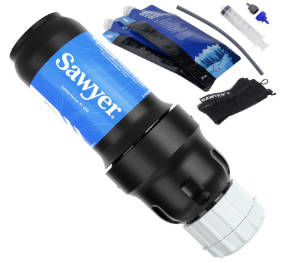
When it was first introduced, the Sawyer Squeeze revolutionized backcountry water filtration, eliminating bulky pump filters and replacing them with a simple hollow-tube filter (originally used for kidney dialysis) that removes bacteria and protozoa from backcountry water sources. The original model was bundled with plastic soft bottles, introducing them to legions of backpackers, and substantially increasing their popularity. The newest models incorporate improved soft bottles and bladders from CNOC, a small cottage gear company popular with thru-hikers, and are much easier to use and more reliable than the original soft bottles that came with the product.
2. Jetboil Personal Cook Systems

Jetboil stoves combine a stove, stove stand, and pot into a single highly packable unit optimized for boiling water to rehydrate dried food. Lightweight and fast-boiling, they were instrumental in revolutionizing backcountry cooking by making it easier to rehydrate freeze-dried and dehydrated meals. While the range of stoves they offer has expanded greatly, the Jetboil Flash is still their most popular model for camping and backpacking
3. Zpacks Hexamid Dyneema Ultralight Tent
 The Original Hexamid Tent in the Dry River Wilderness
The original Zpacks Hexamid Tent (8.0 oz) was the first ultralight pyramid-style Dyneema tent available. The first model, which became available in 201o, was a 1-person single-wall tent with a fully integrated mesh floor. While it's been updated numerous times and copied by other manufacturers, Zpack's Dyneema mid-style tents still dominate the ultralight backpacking and thru-hiking market.
4. Platypus Soft Bottles

Durable with a gusseted bottom so they stand up on their own for ease of use in camp, Platypus soft bottles were the first bottles that could be rolled up and stowed away when not needed. Need to carry extra water? No problem, simply unroll a Platypus soft bottle and it will magically expand to provide extra capacity with an added level of durability that is unsurpassed by soft bottles from other manufacturers.
5. Therm-a-Rest ZLite Foam Sleeping Pad

While rolled foam sleeping pads have always been an inexpensive option for backpacking and camping sleep insulation, the Therm-a-Rest Zlite sleeping pad broke the mold with its innovative folding design and egg-carton surface, making it infinitely more packable. Carried by backpackers who need a pad that will never spring an air leak, the ZLite has myriad uses beyond its role in backpacking sleep systems. It can be used as a virtual frame for an ultralight backpack, a windbreak for a stove, or broken-leg padding for wilderness first aid, among many other uses.
6. CamelBak Hydration Systems

CamelBak was the first gear manufacturer to popularize hydration systems, starting in 1988, for day hiking, giving hikers a comfortable alternative to carrying metal canteens or bulky Nalgene bottles. Their signature innovation was combining a water bladder, a hose, and a reliable bite valve, allowing hikers to sip water all day long to remain hydrated. It's difficult to find day hikers who don't use a hydration system to this day.
7. Gossamer Gear Mariposa 60 Backpack
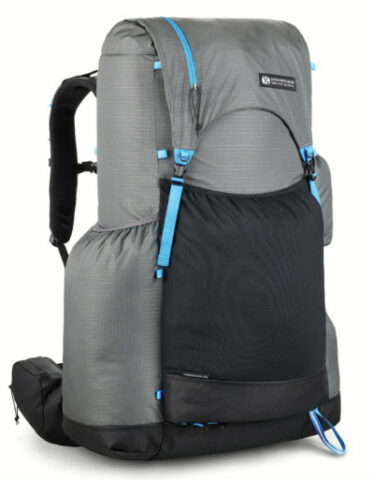
First introduced in 2004, the Gossamer Gear Mariposa is an ultralight backpack with an aluminum frame (the original frame was a pair of carbon fiber arrow shafts) and an external foam pad for back padding that can be removed and used as a sit pad. It has a unique three-side-pocket design with one long and two short open pockets that's a favorite among thru-hikers as well as backpackers transitioning to lighter-weight gear. Still a popular choice, it's been refined over the years and remains quite affordable despite being an ultralight backpack.
8. Crocs
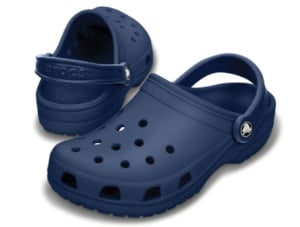
First introduced in 2002, Crocs are waterproof, slip-resistant clogs that combine excellent drainage and fast drying times with comfort, especially for foot recovery after a full day of hiking in hot weather. They're lightweight, virtually indestructible, and available in a wide range of colors.
9. Darn Tough Socks

Walk into a hiker hostel in the United States, and 80% or more of the occupants will be wearing Darn Tough Socks. Incredibly durable and backed by a lifetime guarantee, Darn Tough hiking socks are made in Vermont (USA) from ethically sourced wool. No other socks come close to the durability and comfort provided by Darn Tough Socks.
10. Patagonia R1 Hoodie
 Original Patagonia R1 Hoodie
While it's no longer made, the Patagonia R1 Hoodie (first introduced in 2007) still deserves recognition as the first fleece hoodie to achieve widespread adoption across multiple outdoor pursuits. Originally developed for climbing, the Patagonia R1 Hoodie featured a scuba hood, a zippered chest pocket, and an extended front zipper for enhanced ventilation. Patagonia has since morphed the original grid fleece fabric into all manner of variants that bear little resemblance to the original. Why, one might ask, did they destroy this iconic garment?
11. BearVault BV500 Bear Canister

When you think about “bear canisters”, the BearVault BV500 immediately comes to mind. First introduced in 2008, it's still the best-selling large grizzly-proof bear canister available. While smaller alternatives are now available for shorter backpacking trips, including IGBC-approved soft bags, the BearVault BV500 is the most popular bear canister because it balances a high-capacity 11.5-liter size (holding a week's worth of food) with a relatively lightweight, transparent polycarbonate body, tool-free opening design, and universal approval across all national parks and forests. It makes a half-decent camp chair to sit on too.
12. Snow Peak Ultralight Titanium Spork

Snow Peak's iconic ultralight titanium spork, a combined spoon and fork, became widely available by 2007 and helped revolutionize freezer bag cooking where backpackers assembled meals with dehydrated ingredients in Ziploc bags which could be rehydrated with boiling water. Long-handled titanium sporks soon followed, and the rest is history.
13. Kahtoola Microspikes
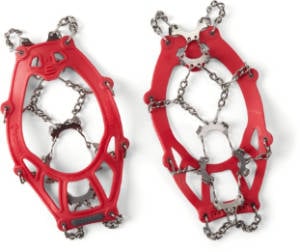
Kahtoola Microspikes revolutionized winter hiking traction, making it possible to hike on winter trails with soft-soled footwear, eliminating the need for stiff mountaineering boots and specialized crampons. This opened winter hiking up to a vastly larger audience and spurred the development of lighterweight single-layer insulated footwear for winter hiking.
14. Big Agnes Copper Spur UL 2 Tent

First available in 2008, the 2-person Big Agnes Copper Spur was the first high-quality lightweight double-wall two-person freestanding tent to go mainstream. Weighing under 3 lbs, it became the benchmark against which all other two-person, double-wall freestanding tents are compared, and it remains so to this day.
15. Hennessy Hammocks

The first Hennessy Hammock came out in 1999 and sparked the hammock camping revolution. Designed as a completely integrated shelter system including a tarp and mosquito hammock, the early models were entered from below through a slit in the hammock to prevent insects from entering. Subsequent models introduced side-zipper entry and materials with varying fabric weights for larger adults and kids.
SectionHiker never accepts payment for gear reviews or editorial coverage. When you buy through affiliate links on our site, we may earn a small commission at no extra cost to you. Help us continue to test and write unsponsored and independent gear reviews, hiking and backpacking FAQs, and free hiking guides.









 English (US) ·